
Article
How Can Functional Safety Improve Reliability and Reduce Downtime?
29/01/2026
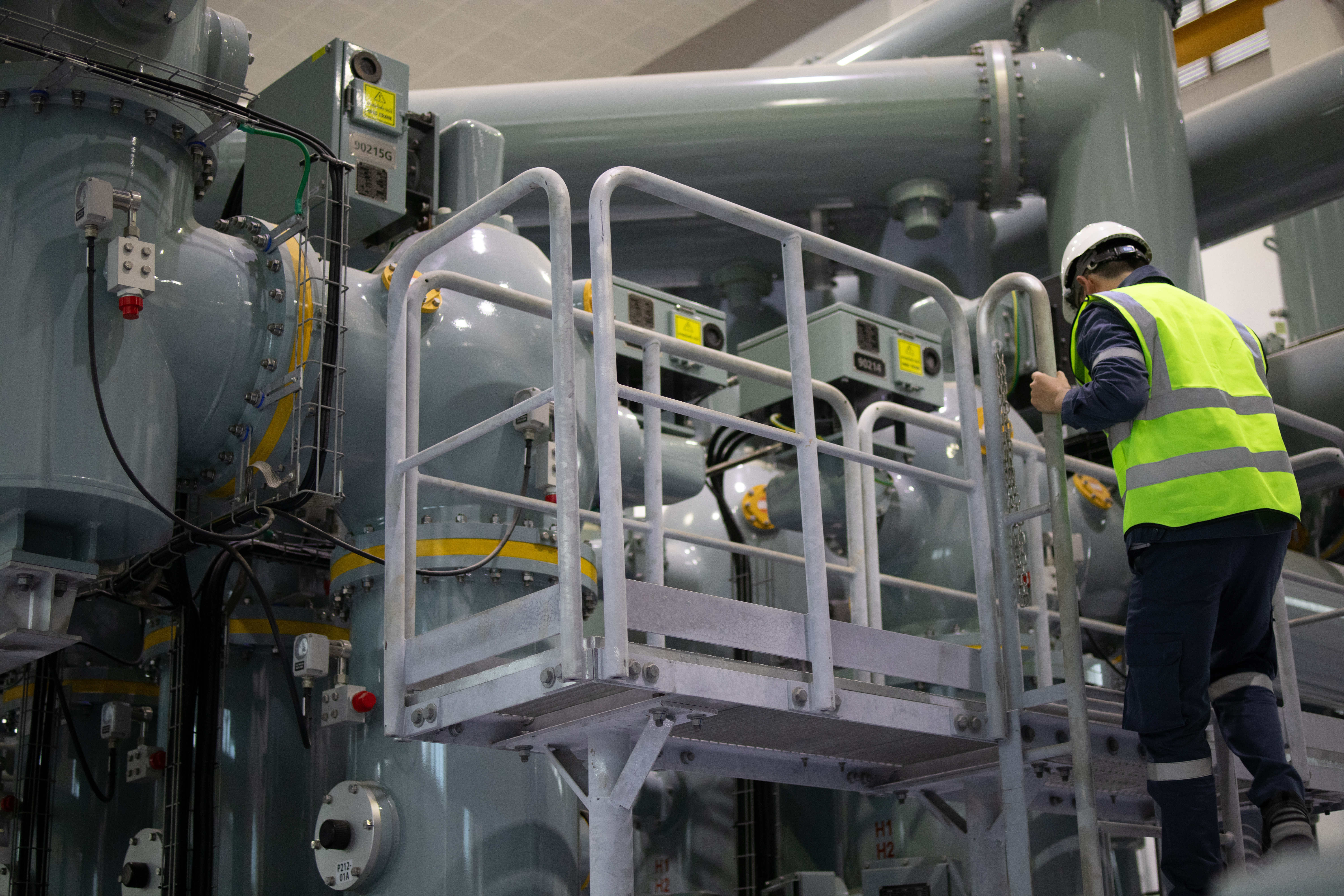
In high-risk and highly automated industries, reliability is not just a performance metric. It is fundamental to safety, productivity, and profitability. Unplanned downtime can halt operations, damage equipment, disrupt supply chains, and expose organisations to significant financial and reputational risk.
Although its purpose is primarily to provide a safety function, functional safety plays a critical role in reducing these risks by ensuring that systems respond correctly when faults occur, to move the process to a safe state, thus avoiding further damage.
Understanding how functional safety reduces downtime in industry helps organisations see safety systems not as a cost, but as an investment in operational stability and long-term efficiency.
Understanding Functional Safety and Reliability
Functional safety refers to the ability of safety-related systems to perform specific functions correctly in response to hazardous conditions. These systems are designed to detect abnormal states and place the process into a safe condition, either by shutting it down or preventing escalation.
Reliability, in an operational context, refers to the ability of a system to perform its required function consistently over time. When safety systems are poorly designed, inadequately tested, or incorrectly maintained, they can fail in two ways. They may not act when required, or they may trip unnecessarily (known as a spurious trip). Both outcomes increase risk and downtime.
Functional safety and plant reliability are therefore closely linked. Well-designed safety systems reduce the likelihood of incidents and minimise unnecessary interruptions, directly supporting operational continuity.
How Functional Safety Reduces Downtime in Industry
One of the most common causes of unplanned downtime is the failure of control or protection systems. This can include instrumentation faults, control logic errors, or degradation of safety-critical components. Functional safety addresses these risks through structured design, verification, and lifecycle management, as well as independence from control systems.
By identifying safety functions clearly and assigning appropriate Safety Integrity Levels, organisations ensure that safety systems are reliable enough for the level of risk they are managing. This reduces spurious trips and nuisance shutdowns, which are a major contributor to lost production time.
Functional safety also requires regular proof testing (to uncover unrevealed failures, such as a stuck valve) and inspection of safety-related systems. These activities identify hidden faults before they result in failure. Detecting issues early allows alternative risk reduction measures to be implemented, thus allowing maintenance to be planned rather than reactive, and reducing the likelihood of sudden shutdowns during operation.
As a result, functional safety reduces downtime in industry by shifting failures from unexpected operational events to controlled maintenance activities.
Benefits of Functional Safety for Plant Reliability
The benefits of functional safety for plant reliability extend beyond incident prevention. A robust functional safety framework improves confidence in equipment performance and process stability.
When safety systems are designed and maintained correctly, operators trust them. This trust reduces the temptation to bypass interlocks or alarms, which is a common cause of reliability problems in poorly managed plants and has also led to major disasters, such as the BP Texas City Refinery explosion in 2005). Clear safety logic and well-managed alarms also improve operator response, reducing the time taken to stabilise abnormal situations.
Functional safety encourages a systematic approach to change management. Any modification to equipment, software, or operating conditions is assessed for its impact on safety functions. This prevents unintended consequences that could compromise reliability, such as introducing new failure modes or reducing system availability.
Over time, this disciplined approach leads to fewer disruptions, more predictable operation, and improved asset performance.
Functional Safety and Operational Efficiency
There is a strong relationship between functional safety and operational efficiency. Efficient operations rely on stable processes, minimal interruptions, and effective use of resources. Safety systems that trip unnecessarily or fail unpredictably undermine all three.
Functional safety ensures that protection systems are neither overdesigned nor underdesigned. Overly conservative systems can cause frequent shutdowns, while inadequate systems increase the risk of major incidents. By aligning safety system performance with actual risk, organisations achieve a balance between protection and availability.
Functional safety also supports efficient maintenance planning. Proof testing intervals, inspection regimes, and lifecycle management are defined based on risk and reliability requirements. This allows maintenance teams to focus effort where it is most needed, reducing unnecessary work and avoiding last-minute interventions.
In this way, functional safety directly contributes to operational efficiency by supporting smoother, more reliable plant operation.
Linking Reliability to Functional Safety Compliance
Compliance with functional safety standards such as IEC 61508 and IEC 61511 is often viewed primarily as a regulatory requirement. However, linking reliability to functional safety compliance reveals additional value.
These standards require a structured lifecycle approach, covering specification, design, verification, operation, and maintenance. Each stage includes checks that improve reliability, such as independent review, validation testing, and documentation control.
Compliance also drives consistency. Safety functions are specified clearly, assumptions are documented, and responsibilities are defined. This reduces ambiguity and prevents knowledge loss over time, particularly in complex or ageing facilities.
By embedding these practices into everyday operations, organisations improve both safety and reliability. Compliance becomes a tool for operational excellence rather than a box-ticking exercise.
Reducing Unplanned Shutdowns with Functional Safety
Reducing unplanned shutdowns with functional safety starts with understanding how and why systems fail. Many shutdowns occur not because of real hazards, but due to instrumentation drift, configuration errors, or lack of maintenance.
Functional safety addresses these issues through regular testing, performance monitoring, and fault diagnostics. Safety systems are designed to fail safely and predictably, allowing operators time to respond effectively.
Human factors also play an important role. Functional safety studies often highlight the need for clearer procedures, better training, or improved interfaces. Addressing these issues reduces the likelihood of operator-induced trips and improves recovery when abnormal conditions occur.
When functional safety is managed as an ongoing process rather than a one-time project, unplanned shutdowns become less frequent and less disruptive.
Long-Term Reliability Through Lifecycle Management
Functional safety does not end at commissioning; in fact, it starts at the hazard and risk assessment stage and covers the entire lifecycle through to decommissioning. Before being placed into service, safety systems require and additional, in-depth test to validate them, which goes beyond the typical commissioning tests.
Safety-related systems age, for example, due to component useful life. Operating conditions can change, and technology evolves. Lifecycle management ensures that safety and reliability are maintained throughout the life of the plant; this is achieved via implementation of a Functional Safety Management System.
Regular reviews of safety performance, management of change processes, and periodic reassessment of risks help identify emerging reliability issues before they cause downtime. This proactive approach supports continuous improvement and long-term asset integrity.
Organisations that invest in lifecycle management see fewer surprises, lower maintenance costs, and improved operational resilience.
How 6 Engineering Can Help
At 6 Engineering, we help organisations use functional safety as a tool to improve reliability and reduce downtime. Our engineers work across high-risk industries to design, verify, and maintain safety-related systems that support both protection and performance.
We provide support across the full functional safety lifecycle, including hazard identification, SIL determination, system verification, proof testing strategies, and compliance with IEC 61508 and IEC 61511. Our approach focuses on practical solutions that reduce unplanned shutdowns and improve operational efficiency.
By linking functional safety to reliability, we help clients move beyond compliance and build systems that are safer, more dependable, and better aligned with business objectives.
If you want to understand how functional safety can improve the reliability of your operations and reduce downtime, get in touch with 6 Engineering today.