Article
Why Is Functional Safety Critical for High-Risk Industries?
02/02/2026
In high-risk industries, where a single fault can lead to serious harm (or worse), functional safety plays a vital role in preventing catastrophic incidents, so it’s important to get it right.
From power generation and oil and gas to chemical manufacturing and pharmaceuticals, complex automated systems control essential processes every second of the day. When these systems fail, the consequences can be severe.
Functional safety ensures that when something goes wrong, safety systems respond to put the system into a safe state. This helps to protect people, the environment, and critical assets.
What Is Functional Safety?
Functional safety is a specialist part of the overall design safety provision. It depends on systems or equipment operating correctly in response to their inputs. It ensures that control systems, sensors, and protective devices perform as intended even when faults occur.
For example, if a chemical reaction has a thermal runaway hazard, then a safety system could monitor the temperature of the reactor system and take action once a high temperature threshold is reached, such as by applying emergency cooling and stopping the input of reagents.
In practice, this means designing emergency shutdown systems, verifying that their design is adequate, and validating their functionality to ensure that they activate when needed.
Functional safety gives organisations confidence that their automated safeguards will work when they are required, avoiding the need for human intervention in a critical situation or even having to send them into harm’s way to intervene.
The international benchmark for this discipline is IEC 61508, the standard that defines the framework for designing, implementing, and maintaining safety-related systems for electrical, electronic and programmable electronic functions.
It applies across all industries and forms the foundation for many sector-specific standards, including IEC 61511 for the process sector, IEC 61513 for nuclear, IEC 62061 for machinery safety systems and ISO 26262 for automotive applications. Functional safety is applied where you might not expect it too; there are also separate standards for the rail industry: EN 50126 (IEC 62278), EN 50128 (IEC 62279), EN 50657 and EN 50129 (IEC 62425).
Why Functional Safety Matters in Industry
Modern industrial plants rely heavily on automation. As systems become more complex, the potential for software or hardware faults increases. The likelihood of human error also increases when people are required to make decisions under pressure or take into account a complex scenario.
Functional safety is prevalent in high-risk sectors, where it is vital to ensure that failures are detected, controlled, and contained before they escalate.
Without rigorous safety systems, even a minor fault could trigger a chain reaction leading to fire, explosion, or toxic release. Functional safety protects against these outcomes by creating multiple, independent layers of protection designed to detect abnormal conditions and bring the process to a safe state.
Effective functional safety also supports regulatory compliance, operational efficiency, and business continuity.
Beyond meeting legal requirements, it demonstrates a company’s commitment to protecting its workforce and the surrounding community. For industries that operate under close public and regulatory scrutiny, this commitment builds trust and strengthens reputation.
The Role of IEC 61508 in Functional Safety
The role of IEC 61508 in functional safety cannot be overstated. It provides the foundation for identifying, analysing, and managing risk across safety-related systems.
The standard introduces the concept of Safety Integrity Levels (SILs), which define the required reliability of each safety function based on the severity and frequency of potential hazards.
IEC 61508 establishes a lifecycle approach that covers everything from initial concept and design through to operation, maintenance, change, and eventual decommissioning.
This lifecycle ensures that safety is not a one-time exercise during design but a continuous process that evolves alongside technology and operational change.
By following the standard, organisations can demonstrate that they have applied a systematic, risk-based methodology to design and verify safety-critical functions.
It also provides a common technical language that enables consistency across engineering disciplines, suppliers, and regulators.
Functional Safety Across High-Risk Sectors
While the principles remain consistent, the systems to which functional safety is applied varies by sector.
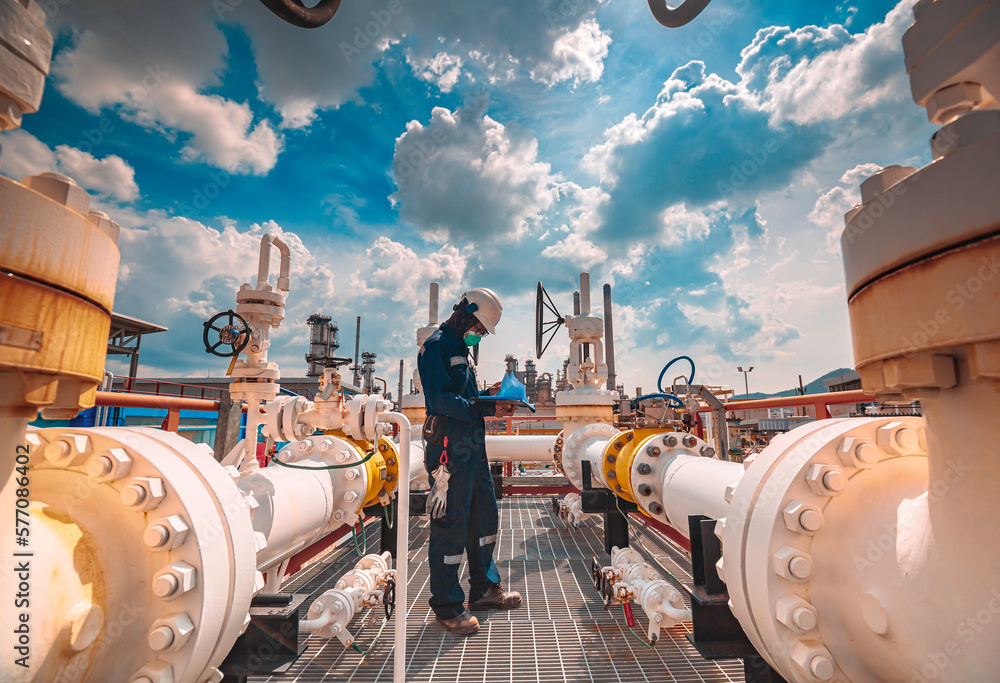
In oil and gas, functional safety systems are mainly applied to protect against over-pressure, gas leaks, and fires. Safety Instrumented Systems (SIS) automatically detect dangerous conditions and initiate shutdowns to prevent escalation.
In chemical and pharmaceutical manufacturing, functional safety tends to be applied to reactors, mixers, and temperature-controlled processes, ensuring that runaway reactions or overheating do not occur.
In transport and infrastructure, such as rail networks or automated systems, functional safety ensures reliable signalling, braking, and monitoring to protect passengers and operators.
Across all sectors, the purpose is the same: to detect faults, and ensure that safety systems behave as intended (even under fault conditions) and that every layer of protection performs as intended.
Common Challenges in Functional Safety
Achieving and maintaining compliance with IEC 61508 and related standards can be complex. Many organisations struggle with:
Assessing the equipment under control (EUC) in an appropriate manner.
Defining safety functions clearly and assigning appropriate Safety Integrity Levels.
Managing change when modifications or upgrades are performed.
Maintaining documentation across the entire system lifecycle.
Ensuring independence between safety and control functions to avoid common-cause failures.Training personnel to understand and maintain safety systems effectively.
Thoroughly testing the safety function to validate it.
Periodically testing the safety function fully and at the correct interval, to ensure it is still capable of providing protection.
Functional safety is not a one-off project but an ongoing responsibility. Systems must be regularly tested, reviewed, and updated to reflect operational changes, equipment ageing, and evolving technology.
Building a Culture of Functional Safety
While technology forms the backbone of functional safety, people and culture determine its success. Effective functional safety management requires collaboration between engineering, operations, maintenance, and management teams.
Everyone must understand how their actions affect the safety performance of the entire system. To this end, a Functional Safety Management System is mandated by IEC 61508.
A strong safety culture, led, encouraged and supported by those in charge of the organisation, also ensures that potential faults or anomalies are reported early and addressed systematically, preventing small issues from developing into major incidents.
Regular audits, competence assessments, and refresher training keep teams engaged and accountable.
How 6 Engineering Supports Functional Safety
At 6 Engineering, we work with businesses across high-risk sectors to design, verify, and maintain safety-related systems that comply with IEC 61508 and industry-specific standards.
Our functional safety engineers deliver practical, evidence-based support, from hazard identification and SIL determination to validation and proof testing.
We help ensure that your systems respond reliably, even under fault conditions, meet regulatory expectations, and provide peace of mind that every layer of protection is performing as intended.
Functional safety is not just a regulatory requirement; it is a commitment to protecting people, the environment, and your operations.
Contact the team to find out more about how 6 Engineering can help you strengthen functional safety in your operations.